What Is Reformer Pilates? A Beginner’s Guide
What the reformer is, how it works, and what to expect in your first session, without the marketing language.
2 min read
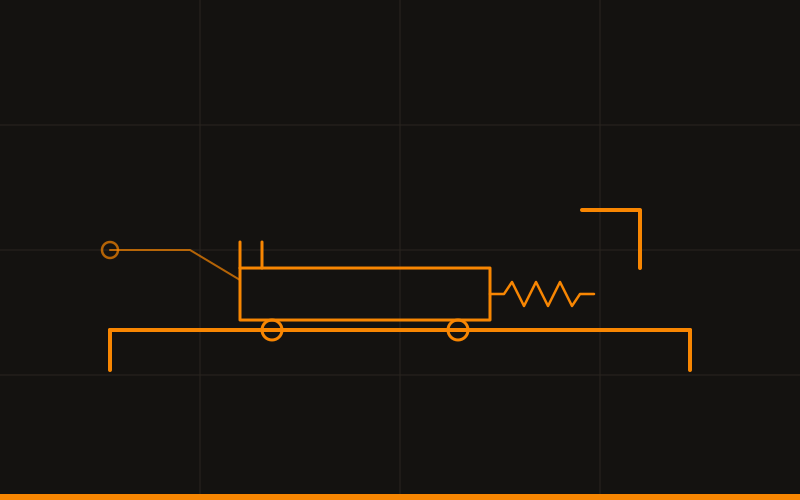
The reformer looks a little strange the first time you see it. A sliding bed, springs underneath, straps at the ends and a foot bar. Joseph Pilates designed it a hundred years ago and the basic logic hasn’t changed since.
How does it work?
The heart of the reformer is the springs. The carriage (the sliding platform you lie on) is attached to the frame by springs. When you push or pull, the springs stretch; when you release, they draw back.
The crucial detail here: the resistance is there in both directions. With weights, gravity works only one way, you strain to lift, not to lower. With a spring you have to control the movement on the way out and the way back. The muscle works as it lengthens, not just as it shortens.
The second detail: the spring resistance is adjustable. The same movement becomes a completely different challenge as you change the number of springs. In some movements the springs even help you, which is why the reformer can be more approachable than the mat for someone who has never trained.
What happens in your first session?
We start with an assessment. We look at your posture, run a few simple movement tests, and talk through any pain history and doctor’s restrictions. Those fifteen minutes shape how every session after it is built.
Then it usually goes like this:
- Breath and core: on your back, feet on the bar. We tie the breath to the rhythm of the movement.
- Footwork: the foundational leg series you do by pushing the carriage with your feet. Different foot positions bring different muscles forward.
- Core and upper body: arm work with the straps, the abdominal series.
- Stretch: closing with hip, hamstring and chest openers.
You’re not expected to learn everything in the first session. Most people start recognising the movements by the second or third.
What will you feel?
You’ll probably swing between “is that all?” and “why is this so hard?”. The movements are small and controlled; from the outside they look easy. But because the deep muscles are working constantly, you might feel it the next day in places you didn’t know you had.
That’s normal. Sharp pain, or pain felt in a joint, is not. If that happens, tell your instructor.
Frequently asked
Do I need to be flexible? No. Flexibility isn’t a prerequisite for pilates, it’s a result of it.
Will it help me lose weight? Pilates on its own isn’t a weight-loss method. It has a clear effect on muscle, posture and movement quality; weight management is a matter of nutrition and overall activity.
How many days a week? Two days gives most people steady progress. One day still makes a difference, just more slowly.
For more on the reformer, see the class page, or ask us anything on WhatsApp.
One class is enough, the body tells the rest.
We assess in the first session and build the programme together. So you can see the studio and meet your instructor before joining.
- Opening hours
- Every day except Saturday, 09:00–22:00