Posture Problems in Desk Workers
What does sitting eight hours a day do to your shoulders, neck and lower back? And what exactly does pilates change in that picture?
2 min read
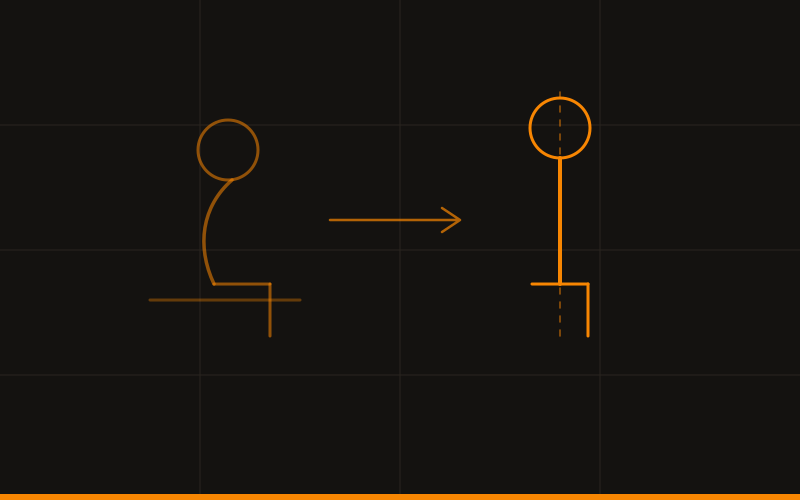
The body adapts to the position you repeat most. If you sit the same way for eight hours a day, it starts to treat that shape as its default.
What actually happens?
The typical desk posture: shoulders rolled forward, head reaching toward the screen, upper back rounded, hips permanently flexed.
In that position:
- The chest muscles shorten. The muscles that pull the shoulders forward stay in a shortened position and, over time, accept that length as “normal”.
- The upper back muscles weaken. The muscles that draw the shoulders back never work, so they switch off.
- The hip flexors shorten. Sitting means keeping the hip flexed continuously.
- The deep abdominals go to sleep. Because the chair supports the trunk, the core muscles don’t need to work.
When the head reaches forward, the load the neck muscles have to carry rises sharply. That’s why neck and shoulder tension is so common among desk workers.
What does pilates do here?
Pilates is not a treatment: let’s be clear. If you’re in pain, you need to see a doctor first.
But as exercise, what it does is quite targeted:
It lengthens what’s shortened. Chest-opening movements and the curve of the Ladder Barrel open the front line that stays closed all day.
It works what’s weakened. The upper-back and shoulder stabilisers are at the centre of the strap work on the reformer.
It wakes what’s asleep. You learn to consciously engage the deep abdominals. That awareness carries on beyond the session.
It moves the spine. A spine that sits in one position all day works forward, back, sideways and rotating in a session.
How long until you notice?
The honest answer: it varies. The general pattern:
- First 2–3 weeks: a learning phase. The change comes more as “awareness”, you start correcting yourself during the day.
- 4–8 weeks: with regular work, concrete change in range of motion and endurance.
- After 3 months: your posture starts to shift on its own.
This assumes at least two regular sessions a week.
Three things you can do at your desk
You can do a little between sessions too:
- Stand up every hour. Even thirty seconds helps. The aim is to stop the hip flexors staying short.
- Shoulder rolls. Draw the shoulders to your ears, then back and down. Five reps.
- Check your screen height. The top of the screen should be at eye level. On a laptop, you need a stand and a separate keyboard.
If you want to see where your posture is, come in for a free assessment.
One class is enough, the body tells the rest.
We assess in the first session and build the programme together. So you can see the studio and meet your instructor before joining.
- Opening hours
- Every day except Saturday, 09:00–22:00